
 Whatsapp
Interest on Drawings: Calculation When Dates Are Given vs Not Given
A clear Class 12 Accountancy guide to interest on drawings, with formulas, average period shortcuts, journal entries, and solved examples.
- 12th
- Accounts
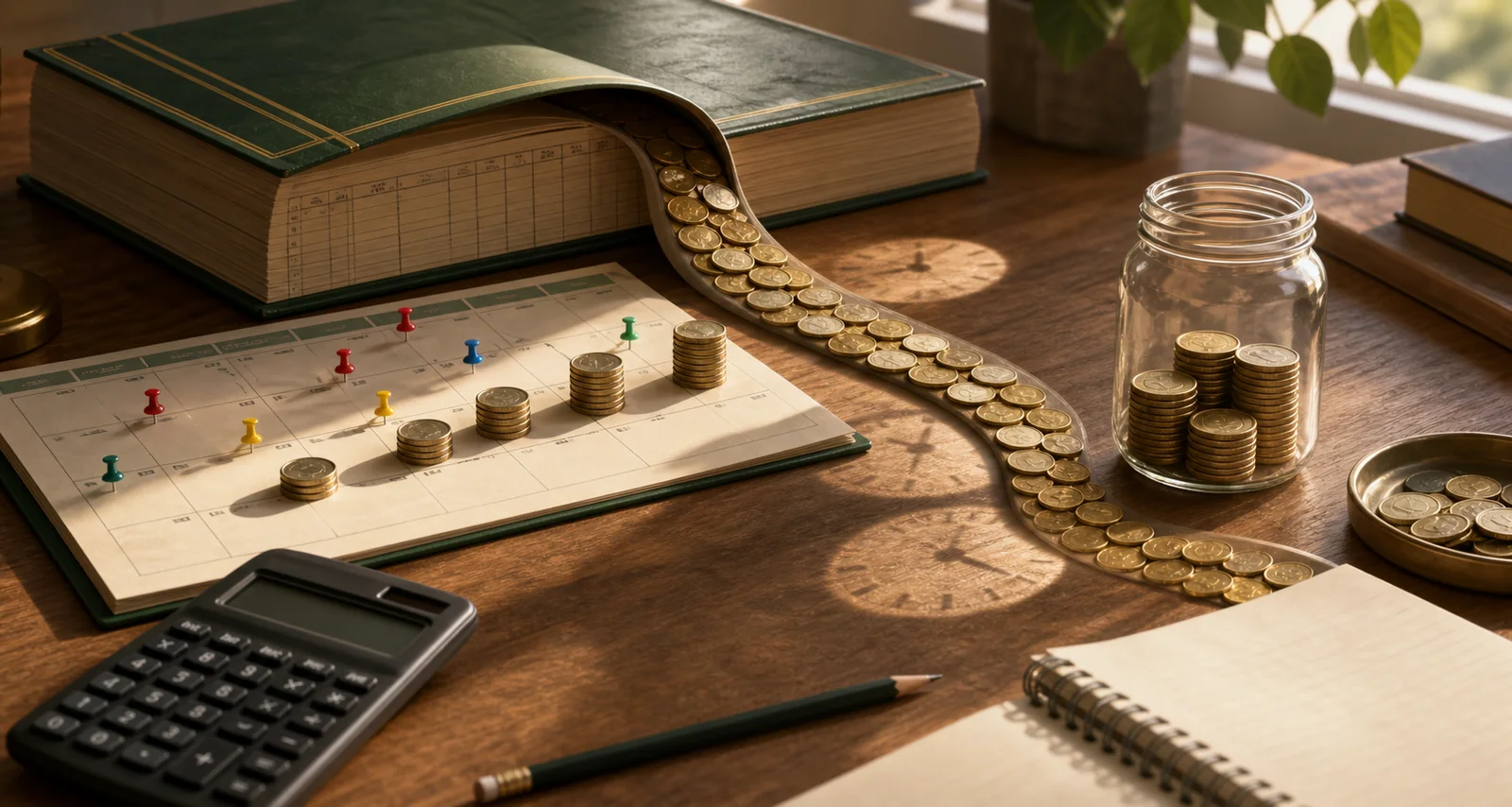
Interest on drawings is one of those Partnership Accounts topics that looks small, but quietly tests whether you have understood time.
The calculation is not just about how much a partner withdrew. It is also about when the money was withdrawn. A partner who withdraws money near the beginning of the year has used the firm’s money for a longer period. A partner who withdraws near the end has used it for a shorter period. That is why dates matter.
But many questions do not give exact dates. Instead, they say things like “Rs. 5,000 per month”, “drawings made at the beginning of every month”, or simply “drawings during the year”. In those cases, you are expected to use the average period method.
Once this sentence becomes clear, the whole topic becomes much easier.
What Interest on Drawings Means
Drawings are amounts withdrawn by a partner from the firm for personal use. These drawings may be in cash or sometimes in goods.
If the partnership deed says that interest will be charged on drawings, the partner has to pay interest to the firm. In accounts, this interest is treated as income for the firm and a charge against the partner.
This does not mean the partner is paying interest to an outsider. It only means the partner’s share or capital is reduced because the partner used the firm’s money personally before the final profit was distributed.
Think of it like this:
| Item | Meaning |
|---|---|
| Drawings | Money or goods taken by a partner for personal use |
| Interest on drawings | Amount charged by the firm because the partner used firm funds |
| Partner’s account | Debited because the partner owes this amount to the firm |
| Firm’s result | Credited through Profit and Loss Appropriation Account |
The Basic Formula
The basic formula is simple:
| Part | Formula |
|---|---|
| Interest on drawings | Drawings x Rate x Time |
| When time is in months | Drawings x Rate x Months / 12 |
For example, if a partner withdrew Rs. 20,000 and interest is charged at 12% per annum for 5 months:
| Particular | Amount |
|---|---|
| Drawings | Rs. 20,000 |
| Rate | 12% per annum |
| Time | 5 months |
| Interest | Rs. 20,000 x 12 / 100 x 5 / 12 = Rs. 1,000 |
The main skill is not the formula. The main skill is choosing the correct time.
First Ask: Are Dates Given?
Before calculating anything, read the question once only for dates.
There are two broad types of questions:
| Type of question | What you should do |
|---|---|
| Dates are given | Calculate interest separately for each withdrawal from its date to year-end |
| Dates are not given but a pattern is given | Use the average period method |
| Only total drawings are given | Follow the wording in the question carefully, usually average period if drawings are throughout the year |
This first decision prevents most mistakes.
When Dates Are Given
When exact dates are given, calculate interest on each drawing separately.
The time period begins on the date of withdrawal and ends on the last day of the accounting year, unless the question gives a different closing date.
For most school questions, the accounting year ends on 31 March. So if a partner withdraws money on 1 July, the period is from 1 July to 31 March, which is 9 months.
Solved Example With Dates
A partner withdrew the following amounts during the year ending 31 March. Interest on drawings is charged at 10% per annum.
| Date of drawing | Amount withdrawn |
|---|---|
| 1 June | Rs. 10,000 |
| 1 September | Rs. 8,000 |
| 1 January | Rs. 12,000 |
Now calculate the time from each date to 31 March.
| Date | Amount | Time to 31 March | Interest |
|---|---|---|---|
| 1 June | Rs. 10,000 | 10 months | Rs. 10,000 x 10 / 100 x 10 / 12 = Rs. 833 |
| 1 September | Rs. 8,000 | 7 months | Rs. 8,000 x 10 / 100 x 7 / 12 = Rs. 467 |
| 1 January | Rs. 12,000 | 3 months | Rs. 12,000 x 10 / 100 x 3 / 12 = Rs. 300 |
| Total interest | Rs. 1,600 |
So, interest on drawings is Rs. 1,600.
Notice that we did not add all drawings first. We calculated each withdrawal for its own time period, then added the interest.
Why You Should Not Average When Dates Are Given
Students sometimes see three or four withdrawals and try to use the average period method. That is risky when exact dates are already given.
If dates are given, the question is asking you to respect those dates. The average period method is mainly for repeated drawings made at regular intervals, where writing every month separately would be unnecessary.
Use the direct method when:
- different dates are clearly mentioned
- different amounts are withdrawn on different dates
- the question gives a table of drawings
- the withdrawals are irregular
In these cases, calculate line by line.
When Dates Are Not Given
When dates are not given, the question usually gives a pattern. For example:
- Rs. 5,000 withdrawn at the beginning of every month
- Rs. 5,000 withdrawn at the end of every month
- Rs. 5,000 withdrawn in the middle of every month
- Rs. 15,000 withdrawn at the beginning of every quarter
- total drawings of Rs. 60,000 during the year
Here, instead of calculating 12 separate months every time, you use the average period.
The formula becomes:
| Part | Formula |
|---|---|
| Interest on drawings | Total drawings x Rate x Average period / 12 |
The average period represents the average time for which the drawings remained withdrawn from the firm.
Monthly Drawings: The Three Main Cases
Monthly drawings are the most common type of question. The difference between beginning, middle, and end of the month is very important.
Assume the accounting year is from 1 April to 31 March.
| Drawing pattern | Average period |
|---|---|
| Beginning of every month | 6.5 months |
| Middle of every month | 6 months |
| End of every month | 5.5 months |
Why does this happen?
If a partner withdraws at the beginning of each month, the first withdrawal is used for 12 months and the last withdrawal is used for 1 month. The average period is:
| Calculation | Result |
|---|---|
| (12 + 1) / 2 | 6.5 months |
If a partner withdraws in the middle of each month, the first withdrawal is used for 11.5 months and the last withdrawal is used for 0.5 month.
| Calculation | Result |
|---|---|
| (11.5 + 0.5) / 2 | 6 months |
If a partner withdraws at the end of each month, the first withdrawal is used for 11 months and the last withdrawal is used for 0 months.
| Calculation | Result |
|---|---|
| (11 + 0) / 2 | 5.5 months |
The calculation is not a trick. It is simply an average of the first and last withdrawal periods.
Solved Example: Monthly Drawings at the Beginning
A partner withdraws Rs. 5,000 at the beginning of every month. Interest on drawings is charged at 12% per annum. Calculate interest on drawings for the year ending 31 March.
| Particular | Amount |
|---|---|
| Monthly drawing | Rs. 5,000 |
| Number of months | 12 |
| Total drawings | Rs. 60,000 |
| Average period | 6.5 months |
| Rate | 12% per annum |
Interest:
| Calculation | Amount |
|---|---|
| Rs. 60,000 x 12 / 100 x 6.5 / 12 | Rs. 3,900 |
So, interest on drawings is Rs. 3,900.
Solved Example: Monthly Drawings at the End
Now take the same amount, but change one word.
A partner withdraws Rs. 5,000 at the end of every month. Interest on drawings is charged at 12% per annum.
| Particular | Amount |
|---|---|
| Total drawings | Rs. 60,000 |
| Average period | 5.5 months |
| Rate | 12% per annum |
Interest:
| Calculation | Amount |
|---|---|
| Rs. 60,000 x 12 / 100 x 5.5 / 12 | Rs. 3,300 |
The total drawings are the same, the rate is the same, and the year is the same. The interest changes because the drawings were made later.
Quarterly Drawings
Quarterly drawings work in the same way. The period changes because the partner withdraws once every three months instead of every month.
| Drawing pattern | Average period |
|---|---|
| Beginning of every quarter | 7.5 months |
| Middle of every quarter | 6 months |
| End of every quarter | 4.5 months |
For a year ending 31 March:
| Pattern | Typical withdrawal periods |
|---|---|
| Beginning of each quarter | 12, 9, 6, and 3 months |
| Middle of each quarter | 10.5, 7.5, 4.5, and 1.5 months |
| End of each quarter | 9, 6, 3, and 0 months |
So the averages are 7.5 months, 6 months, and 4.5 months.
Solved Example: Quarterly Drawings
A partner withdraws Rs. 18,000 at the end of every quarter. Interest on drawings is charged at 10% per annum.
| Particular | Amount |
|---|---|
| Quarterly drawing | Rs. 18,000 |
| Number of quarters | 4 |
| Total drawings | Rs. 72,000 |
| Average period | 4.5 months |
| Rate | 10% per annum |
Interest:
| Calculation | Amount |
|---|---|
| Rs. 72,000 x 10 / 100 x 4.5 / 12 | Rs. 2,700 |
So, interest on drawings is Rs. 2,700.
If the Question Says “During the Year”
Sometimes the question says only this:
“A partner withdrew Rs. 60,000 during the year. Interest on drawings is charged at 10% per annum.”
If no exact dates are given and the wording suggests drawings were made evenly throughout the year, the usual treatment is to take the average period as 6 months.
| Particular | Amount |
|---|---|
| Total drawings | Rs. 60,000 |
| Average period | 6 months |
| Rate | 10% per annum |
| Interest | Rs. 60,000 x 10 / 100 x 6 / 12 = Rs. 3,000 |
This is because, on average, the partner is assumed to have used the money for half the year.
A Quick Decision Table
Use this table when you feel stuck.
| Question wording | Best method |
|---|---|
| Dates of drawings are given | Calculate each drawing separately |
| Different amounts are withdrawn on different dates | Calculate each drawing separately |
| Equal amount withdrawn every month at beginning | Total drawings x rate x 6.5 / 12 |
| Equal amount withdrawn every month in middle | Total drawings x rate x 6 / 12 |
| Equal amount withdrawn every month at end | Total drawings x rate x 5.5 / 12 |
| Equal amount withdrawn every quarter at beginning | Total drawings x rate x 7.5 / 12 |
| Equal amount withdrawn every quarter in middle | Total drawings x rate x 6 / 12 |
| Equal amount withdrawn every quarter at end | Total drawings x rate x 4.5 / 12 |
| Total drawings during the year, no dates | Usually use 6 months if evenly spread |
This table is useful during revision, but do not memorise it blindly. Always connect it to the timeline.
Journal Entries for Interest on Drawings
After calculating interest, the accounting entry is straightforward.
Suppose interest on drawings charged to partner A is Rs. 3,000.
Entry for Charging Interest
| Particulars | Debit | Credit |
|---|---|---|
| A’s Capital A/c Dr. | Rs. 3,000 | |
| To Interest on Drawings A/c | Rs. 3,000 |
If partners have fixed capital accounts, interest on drawings is usually debited to the partner’s Current Account instead of Capital Account.
| Particulars | Debit | Credit |
|---|---|---|
| A’s Current A/c Dr. | Rs. 3,000 | |
| To Interest on Drawings A/c | Rs. 3,000 |
Entry for Transfer to Profit and Loss Appropriation Account
| Particulars | Debit | Credit |
|---|---|---|
| Interest on Drawings A/c Dr. | Rs. 3,000 | |
| To Profit and Loss Appropriation A/c | Rs. 3,000 |
This transfer shows that interest on drawings increases the amount available for appropriation among partners.
Capital Account or Current Account?
This point matters in ledger questions.
| Capital method | Where interest on drawings is posted |
|---|---|
| Fluctuating capital method | Debit partner’s Capital Account |
| Fixed capital method | Debit partner’s Current Account |
Under the fluctuating capital method, almost all partner-related adjustments go through the Capital Account.
Under the fixed capital method, the Capital Account remains fixed unless capital is introduced or withdrawn permanently. So regular adjustments like drawings, interest on drawings, salary, commission, and share of profit go through the Current Account.
Common Mistakes Students Make
The topic is easy when the timeline is clear. Marks are usually lost because of small reading mistakes.
Mistake 1: Calculating Interest on Total Drawings Even When Dates Are Given
If the question gives exact dates, use those dates. Do not combine all drawings first unless they are equal and regular with a clear average period.
Mistake 2: Using 6 Months for Every Question
Six months is not a magic answer. It applies when drawings are assumed to be made evenly during the year or in the middle of each month or quarter.
Beginning of the month gives 6.5 months. End of the month gives 5.5 months.
Mistake 3: Ignoring the Accounting Year-End
Time is counted up to the end of the accounting year. If the year ends on 31 March, count up to 31 March. If the question gives another closing date, count up to that date.
Mistake 4: Confusing Interest on Capital With Interest on Drawings
Interest on capital is allowed to partners. Interest on drawings is charged from partners.
| Item | Effect on partner |
|---|---|
| Interest on capital | Partner is credited |
| Interest on drawings | Partner is debited |
This one table can save you from a wrong-side entry.
Mistake 5: Forgetting the Rate Is Per Annum
Most questions give the rate per annum. If the time is less than one year, you must multiply by months / 12.
For example, 12% for 6 months is not 12%. It is effectively 6% for that period.
Mini Practice Set
Try these without looking at the answer first.
Question 1
A partner withdrew Rs. 4,000 at the beginning of every month. Interest on drawings is charged at 9% per annum. Find interest on drawings.
| Working | Amount |
|---|---|
| Total drawings | Rs. 48,000 |
| Average period | 6.5 months |
| Interest | Rs. 48,000 x 9 / 100 x 6.5 / 12 = Rs. 2,340 |
Answer: Rs. 2,340.
Question 2
A partner withdrew Rs. 6,000 at the end of every month. Interest on drawings is charged at 10% per annum.
| Working | Amount |
|---|---|
| Total drawings | Rs. 72,000 |
| Average period | 5.5 months |
| Interest | Rs. 72,000 x 10 / 100 x 5.5 / 12 = Rs. 3,300 |
Answer: Rs. 3,300.
Question 3
A partner withdrew Rs. 20,000 on 1 July and Rs. 10,000 on 1 January. The year ends on 31 March. Interest on drawings is charged at 12% per annum.
| Date | Amount | Time | Interest |
|---|---|---|---|
| 1 July | Rs. 20,000 | 9 months | Rs. 1,800 |
| 1 January | Rs. 10,000 | 3 months | Rs. 300 |
| Total | Rs. 2,100 |
Answer: Rs. 2,100.
How to Revise This Topic
Do not revise interest on drawings only by reading formulas. Practise it as a timeline topic.
First, draw a line from the start of the accounting year to the end. Mark the withdrawal dates. Then count the months. After two or three questions, the pattern becomes natural.
For average period questions, make a small table in your notebook:
| Pattern | Average period |
|---|---|
| Monthly beginning | 6.5 months |
| Monthly middle | 6 months |
| Monthly end | 5.5 months |
| Quarterly beginning | 7.5 months |
| Quarterly middle | 6 months |
| Quarterly end | 4.5 months |
Frequently Asked Questions
Is interest on drawings an income for the firm?
Yes. Interest on drawings is income for the firm because it is charged from partners for using firm funds personally. It is credited to Interest on Drawings Account and then transferred to Profit and Loss Appropriation Account.
Is interest on drawings debited or credited to the partner?
It is debited to the partner. Under fluctuating capital, it is debited to the partner’s Capital Account. Under fixed capital, it is usually debited to the partner’s Current Account.
What is the formula for interest on drawings?
The formula is drawings x rate x time. If time is in months, use drawings x rate x months / 12.
What if drawings are made at the beginning of every month?
Use the average period of 6.5 months. The first withdrawal stays out for 12 months and the last withdrawal stays out for 1 month, so the average is 6.5 months.
What if drawings are made at the end of every month?
Use the average period of 5.5 months. The first withdrawal stays out for 11 months and the last withdrawal stays out for 0 months.
What if the question gives exact dates?
Calculate interest separately for each withdrawal from its date to the end of the accounting year. Then add the interest amounts.
Can we always use 6 months as the average period?
No. Six months is used only when the wording supports it, such as drawings made evenly throughout the year or in the middle of every month or quarter. If the question says beginning or end, use the correct average period.
Is interest on drawings the same as interest on capital?
No. Interest on capital is allowed to partners and credited to them. Interest on drawings is charged from partners and debited to them.
What happens if the partnership deed is silent?
If the agreement or question does not provide for interest on drawings, it is normally not charged.
Why does timing matter so much in interest on drawings?
Timing matters because a withdrawal made earlier keeps the firm’s money away for a longer period. The longer the partner uses the money, the higher the interest.
Looking for commerce tuitions?
Prachi is a gold-medalist commerce teacher with experience at Deloitte and KPMG. She focuses on fundamentals to build a strong foundation.