
 Whatsapp
Receipts and Payments Account vs Income and Expenditure Account
A clear Accountancy guide to the difference between Receipts and Payments Account and Income and Expenditure Account in not-for-profit organisation accounts.
- 11th
- Accounts
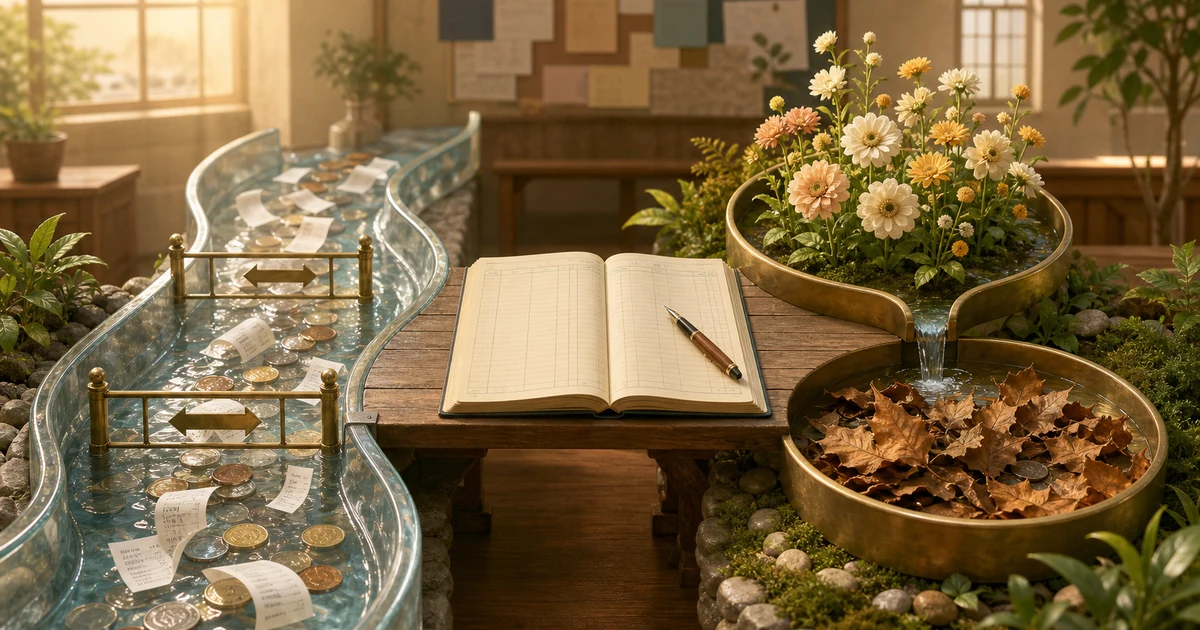
Receipts and Payments Account and Income and Expenditure Account often appear in the same not-for-profit organisation question, so students naturally mix them up.
Both are connected. Both use information about receipts and payments. Both help prepare final accounts.
But they do completely different jobs.
A Receipts and Payments Account answers:
How much cash came in and how much cash went out during the year?An Income and Expenditure Account answers:
What was the surplus or deficit of this year after matching current-year income with current-year expenses?That is the whole difference in simple language.
Once this one line is clear, the topic becomes much easier. You stop asking, “Where did the cash go?” and start asking, “Does this item belong to this year’s income or expense?”
Why These Accounts Are Prepared
Not-for-profit organisations such as clubs, societies, associations, libraries, charitable institutions, schools, and sports organisations do not prepare final accounts to calculate profit in the business sense.
Their aim is service. Still, money is received and spent, so proper accounts are needed.
At the end of the year, these organisations usually need to know three things:
| Question | Statement that helps |
|---|---|
| What cash was received and paid? | Receipts and Payments Account |
| Was there a surplus or deficit for the year? | Income and Expenditure Account |
| What are the assets, liabilities, and fund balances? | Balance Sheet |
The Receipts and Payments Account is usually prepared first because it summarises cash and bank transactions. Then, with the help of adjustments, the Income and Expenditure Account and Balance Sheet are prepared.
What Is a Receipts and Payments Account?
A Receipts and Payments Account is a summary of all cash and bank receipts and all cash and bank payments during an accounting year.
It is prepared from the cash book.
It starts with the opening cash or bank balance and ends with the closing cash or bank balance.
The debit side records receipts. The credit side records payments.
The important point is this:
It records cash movement, not income earned.
So it includes:
- receipts for the current year
- receipts for previous years
- receipts received in advance for next year
- revenue receipts
- capital receipts
- payments for the current year
- payments for previous years
- payments made in advance for next year
- revenue payments
- capital payments
For example, if a club receives Rs. 5,000 as subscription for next year, it will appear in the Receipts and Payments Account because cash has been received.
But that does not mean it is income of the current year.
What Is an Income and Expenditure Account?
An Income and Expenditure Account is prepared to find the surplus or deficit of a not-for-profit organisation for a particular year.
It is similar in purpose to a Profit and Loss Account, but the words are different because the organisation is not working mainly for profit.
If income is more than expenditure, the result is called surplus.
If expenditure is more than income, the result is called deficit.
The Income and Expenditure Account follows the accrual basis. That means it includes only the income and expenses that belong to the current year, whether cash has been received or paid or not.
So it includes:
- current-year revenue income
- current-year revenue expenses
- outstanding income of the current year
- outstanding expenses of the current year
- prepaid income or expenses adjusted to the correct year
- non-cash expenses such as depreciation
It does not include:
- opening cash balance
- closing cash balance
- capital receipts
- capital payments
- income of previous or next year
- expenses of previous or next year
The Main Difference in One Table
Here is the clean comparison students should remember.
| Basis | Receipts and Payments Account | Income and Expenditure Account |
|---|---|---|
| Nature | Summary of cash and bank transactions | Statement of current-year income and expenses |
| Basis | Cash basis | Accrual basis |
| Prepared from | Cash book | Receipts and Payments Account plus adjustments |
| Opening balance | Starts with opening cash or bank balance | Does not start with opening cash or bank balance |
| Closing balance | Ends with closing cash or bank balance | Ends with surplus or deficit |
| Capital items | Included if cash is received or paid | Not included, except related revenue effect such as depreciation |
| Revenue items | Included if cash is received or paid | Included only if they belong to the current year |
| Past and future year items | Included if cash moves this year | Excluded from current-year result |
| Non-cash items | Not included | Included when relevant, such as depreciation or outstanding expenses |
| Final result | Shows closing cash or bank balance | Shows surplus or deficit |
This table is useful, but the real exam skill is applying it in adjustments.
The Best Way to Think About the Difference
Imagine a not-for-profit organisation as a community hall.
At the entrance, someone is noting every rupee that comes in and every rupee that goes out. That person is making a cash record. This is like the Receipts and Payments Account.
Inside the hall, another person is asking:
“Which income belongs to this year?”
“Which expense belongs to this year?”
“Which receipt is actually a fund or asset item?”
“Which payment creates a long-term asset?”
That person is preparing the Income and Expenditure Account.
Both people are using the same activity, but they are looking at it differently.
The first one follows cash. The second one follows the correct accounting year.
Why Opening and Closing Cash Do Not Go to Income and Expenditure Account
This is one of the most common doubts.
The Receipts and Payments Account begins with opening cash or bank balance because it is a cash summary. If the organisation had Rs. 12,000 in bank at the start of the year, that amount is part of the cash position.
But opening cash is not income of the current year. It is money already available from the past.
Similarly, closing cash is not an expense. It is the cash left at the end of the year.
So:
| Item | Receipts and Payments Account | Income and Expenditure Account |
|---|---|---|
| Opening cash or bank balance | Shown | Not shown |
| Closing cash or bank balance | Shown | Not shown |
Closing cash or bank balance goes to the Balance Sheet, not to the Income and Expenditure Account.
Why Capital Items Are Treated Differently
The Receipts and Payments Account includes capital items because it includes all cash transactions.
For example:
Furniture purchased: Rs. 40,000This payment will be shown in the Receipts and Payments Account because cash has gone out.
But furniture is not an expense for one year. It is an asset. So the full Rs. 40,000 is not debited to the Income and Expenditure Account.
Instead:
| Item | Treatment |
|---|---|
| Furniture purchased | Shown as asset in Balance Sheet |
| Depreciation on furniture | Debited to Income and Expenditure Account |
The same logic applies to purchase of equipment, books for a library, building, investments, or other fixed assets.
Capital receipts also need care.
For example, life membership fees, specific donations, endowment fund, or building fund receipts may appear in the Receipts and Payments Account because cash has come in. But if they are capital in nature or meant for a specific purpose, they are shown in the Balance Sheet, not as ordinary income.
How Subscriptions Change the Answer
Subscriptions are a perfect example of the difference between the two accounts.
Suppose the Receipts and Payments Account shows:
Subscriptions received during the year: Rs. 80,000This amount may include:
- subscription for last year
- subscription for this year
- subscription received in advance for next year
The Income and Expenditure Account should show only subscription income of the current year.
So we adjust it.
Use this simple structure:
| Particular | Treatment |
|---|---|
| Subscriptions received during the year | Add |
| Add: Outstanding subscription at the end | Add |
| Add: Subscription received in advance at the beginning | Add |
| Less: Outstanding subscription at the beginning | Less |
| Less: Subscription received in advance at the end | Less |
Why?
Closing outstanding subscription belongs to this year, so add it.
Opening advance subscription was received earlier for this year, so add it.
Opening outstanding subscription belongs to last year, so deduct it if it is included in current cash receipts.
Closing advance subscription belongs to next year, so deduct it.
This one adjustment teaches the whole topic beautifully. The cash figure is only the starting point. The current-year income is the final figure.
How Expenses Are Adjusted
Expenses work in the same way.
Suppose the Receipts and Payments Account shows:
Rent paid during the year: Rs. 18,000This may include rent of the previous year, rent of the current year, or rent paid in advance for next year.
The Income and Expenditure Account should show only rent expense of the current year.
Use this structure:
| Particular | Treatment |
|---|---|
| Rent paid during the year | Add |
| Add: Rent outstanding at the end | Add |
| Add: Rent paid in advance at the beginning | Add |
| Less: Rent outstanding at the beginning | Less |
| Less: Rent paid in advance at the end | Less |
The words change, but the logic stays the same.
Current-year expense must be counted. Old expense and future expense must be removed.
A Simple Solved Example
Let us convert cash information into current-year result.
The Receipts and Payments Account of a club shows the following:
Subscriptions received: Rs. 80,000
Locker rent received: Rs. 6,000
General donation received: Rs. 10,000
Rent paid: Rs. 18,000
Salaries paid: Rs. 30,000
Stationery paid: Rs. 4,500
Furniture purchased: Rs. 25,000
Additional information:
Subscriptions include Rs. 3,000 for last year.
Subscriptions include Rs. 5,000 received in advance for next year.
Subscriptions outstanding at the end of the year are Rs. 7,000.
Rent paid includes Rs. 2,000 for last year.
Rent outstanding at the end of the year is Rs. 3,000.
Rent paid in advance at the end of the year is Rs. 1,000.
Depreciation on furniture is Rs. 2,500.
First, calculate subscription income for the year:
| Particular | Amount |
|---|---|
| Subscriptions received | Rs. 80,000 |
| Add: Outstanding subscriptions at the end | Rs. 7,000 |
| Less: Subscriptions for last year | Rs. 3,000 |
| Less: Subscriptions received in advance for next year | Rs. 5,000 |
| Subscription income for the year | Rs. 79,000 |
Now calculate rent expense for the year:
| Particular | Amount |
|---|---|
| Rent paid | Rs. 18,000 |
| Add: Rent outstanding at the end | Rs. 3,000 |
| Less: Rent paid for last year | Rs. 2,000 |
| Less: Rent paid in advance at the end | Rs. 1,000 |
| Rent expense for the year | Rs. 18,000 |
Now prepare the Income and Expenditure Account summary:
| Income | Amount |
|---|---|
| Subscriptions | Rs. 79,000 |
| Locker rent | Rs. 6,000 |
| General donation | Rs. 10,000 |
| Total income | Rs. 95,000 |
| Expenditure | Amount |
|---|---|
| Rent | Rs. 18,000 |
| Salaries | Rs. 30,000 |
| Stationery | Rs. 4,500 |
| Depreciation on furniture | Rs. 2,500 |
| Total expenditure | Rs. 55,000 |
Surplus = Rs. 95,000 - Rs. 55,000 = Rs. 40,000Furniture purchased for Rs. 25,000 is not shown as an expense. It is an asset. Only depreciation of Rs. 2,500 is shown as expenditure.
Common Mistakes Students Make
The first mistake is treating every receipt as income.
If the question shows life membership fees, specific donation, building fund, endowment fund, or sale of asset, pause before sending it to the Income and Expenditure Account.
The second mistake is treating every payment as expense.
Purchase of furniture, purchase of equipment, purchase of investment, or construction of building may be cash payments, but they are not ordinary expenses of the year.
The third mistake is carrying opening and closing cash to the Income and Expenditure Account.
Opening cash and closing cash belong to the cash summary and Balance Sheet. They do not decide surplus or deficit.
The fourth mistake is ignoring adjustments.
Outstanding expenses, prepaid expenses, accrued income, income received in advance, and depreciation are exactly the items that turn a cash summary into a proper final result.
The fifth mistake is memorising treatment without reading the wording.
For example, donation may be revenue or capital depending on whether it is general, specific, large, recurring, or clearly instructed in the question.
How to Approach These Questions Step by Step
Use this method when you get a full not-for-profit final accounts question.
- Read the Receipts and Payments Account carefully.
- Underline all opening and closing cash or bank balances.
- Mark capital items such as assets, investments, special funds, and life membership fees.
- Mark revenue income and revenue expenses.
- Read the additional information twice.
- Adjust subscriptions, rent, salaries, insurance, interest, or any similar item to the current year.
- Put only current-year revenue items in the Income and Expenditure Account.
- Transfer assets, liabilities, funds, opening capital fund, and closing balances to the Balance Sheet.
This order keeps the answer calm.
Do not start writing the Income and Expenditure Account immediately after seeing the Receipts and Payments Account. First sort the items. Then write.
Quick Memory Trick
Here is a simple way to remember the difference:
Receipts and Payments Account = cash movement
Income and Expenditure Account = current-year result
Balance Sheet = financial position
Or even shorter:
Cash, result, position.The Receipts and Payments Account tells you the cash story.
The Income and Expenditure Account tells you the year’s performance story.
The Balance Sheet tells you what the organisation owns and owes at the end.
Once you separate these three stories, not-for-profit organisation accounts become much more logical.
Frequently Asked Questions
1. Is Receipts and Payments Account the same as Income and Expenditure Account?
No. Receipts and Payments Account is a summary of cash and bank receipts and payments. Income and Expenditure Account shows the surplus or deficit for the current year after adjusting income and expenses on accrual basis.
2. Why is opening cash balance not shown in Income and Expenditure Account?
Opening cash balance is money already available at the beginning of the year. It is not income earned during the current year, so it is not shown in the Income and Expenditure Account.
3. Why is closing cash balance not shown in Income and Expenditure Account?
Closing cash balance is the cash or bank amount left at the end of the year. It is shown in the Balance Sheet as an asset, not in the Income and Expenditure Account.
4. Are capital receipts shown in Income and Expenditure Account?
Usually no. Capital receipts such as life membership fees, endowment fund, specific donations, or building fund receipts are generally shown in the Balance Sheet unless the question gives a different instruction.
5. Are capital payments shown in Income and Expenditure Account?
The full capital payment is not shown as an expense. For example, furniture purchased is shown as an asset. However, depreciation on that furniture is shown as expenditure for the year.
6. What is the result of Income and Expenditure Account called?
If income is more than expenditure, the result is called surplus. If expenditure is more than income, the result is called deficit.
7. Which account is prepared first?
Usually, the Receipts and Payments Account is prepared first because it summarises cash and bank transactions. The Income and Expenditure Account is then prepared using that account and the additional adjustments.
8. What is the most important difference to remember?
Receipts and Payments Account follows cash. Income and Expenditure Account follows the current accounting year. That one difference explains most adjustments in this chapter.
Looking for commerce tuitions?
Prachi is a gold-medalist commerce teacher with experience at Deloitte and KPMG. She focuses on fundamentals to build a strong foundation.