
 Whatsapp
Trade Discount vs Cash Discount in Journal Entries
Understand trade discount and cash discount in journal entries with simple rules, solved examples, and common mistakes to avoid.
- 11th
- Accounts
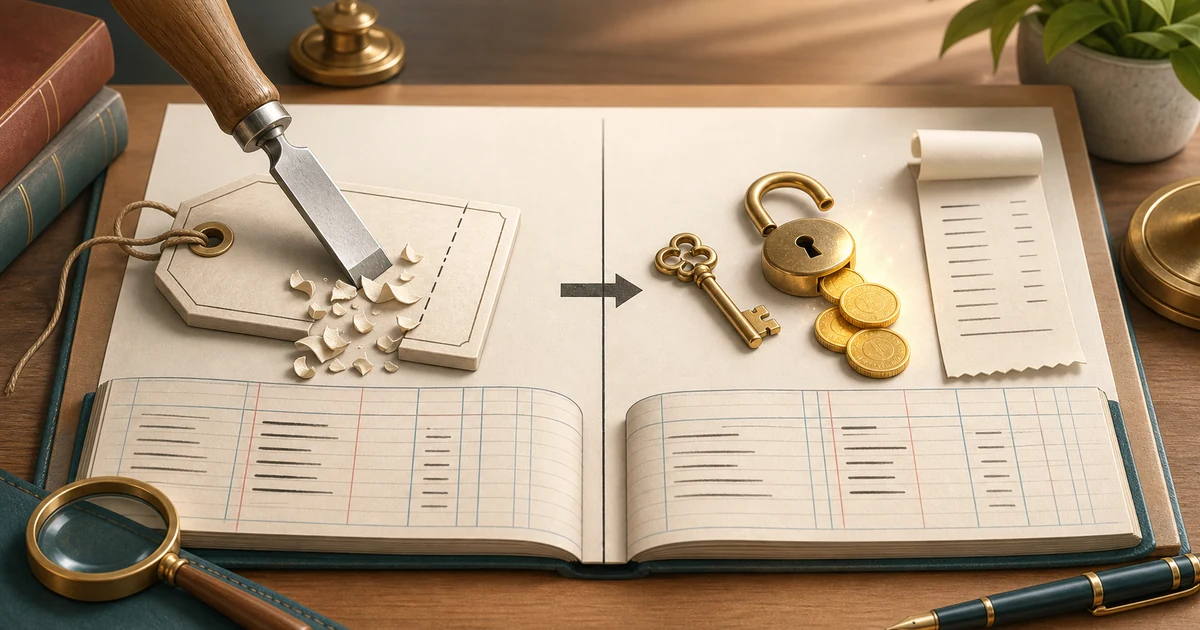
Trade discount and cash discount look similar because both reduce an amount.
But in journal entries, they behave very differently.
Trade discount is adjusted before the transaction is recorded. Cash discount is recorded because it happens when money is paid or received.
That one difference solves most questions.
If you try to record both discounts in the same way, the entry becomes confusing. You may debit or credit the wrong discount account. You may calculate discount on the wrong amount. You may also make the journal entry balance by chance without actually understanding it.
This guide will make the difference clear with rules, formats, solved entries, and common mistakes.
Once this is clear, discount questions become much easier.
The Simple Difference
Here is the shortest way to remember it.
| Point | Trade Discount | Cash Discount |
|---|---|---|
| When it is given | At the time of sale or purchase | At the time of payment or receipt |
| Why it is given | Usually for bulk purchase, trade practice, or price concession | To encourage quick payment or full settlement |
| Recorded separately? | No | Yes |
| Amount used in entry | Net invoice amount after trade discount | Full amount due, split into cash or bank and discount |
| Account name used | No separate Trade Discount A/c | Discount Allowed A/c or Discount Received A/c |
The main idea is this:
Trade discount changes the invoice value.
Cash discount changes the settlement of an amount due.
That is why the accounting treatment is different.
What Is Trade Discount?
Trade discount is a reduction allowed by the seller on the list price of goods.
It is usually allowed because of business reasons such as bulk purchase, regular customer relationship, catalogue pricing, or dealer pricing.
For example, a seller may list goods at Rs. 50,000 and allow trade discount at 10 percent.
The buyer does not record purchases at Rs. 50,000.
The buyer records purchases at:
List price                         Rs. 50,000
Less: Trade discount at 10 percent Rs.  5,000
Invoice value                      Rs. 45,000
So the journal entry is made for Rs. 45,000 only.
Think of trade discount as a price correction before accounting begins.
It is like trimming the price tag before the amount enters the journal.
What Is Cash Discount?
Cash discount is a deduction allowed at the time of payment.
It is usually given when a debtor pays quickly, pays before the due date, or settles the account in full.
For the person receiving discount, it is a gain.
For the person allowing discount, it is an expense.
Example:
Rohan owes Rs. 20,000. He pays Rs. 19,600 in full settlement. The remaining Rs. 400 is cash discount.
For Rohan, it is discount received.
For the seller, it is discount allowed.
Cash discount must be recorded because the debtor’s account or creditor’s account has to be settled completely, even though the cash or bank amount is smaller.
Why Trade Discount Is Not Recorded Separately
This is the part that confuses many students.
Suppose goods have a list price of Rs. 80,000 and trade discount is 20 percent.
The discount is Rs. 16,000.
The invoice value is Rs. 64,000.
The actual purchase or sale value for accounting is Rs. 64,000. The Rs. 16,000 does not become an expense for the seller or an income for the buyer in the basic journal entry.
That is why you do not write:
Trade Discount A/c Dr.or
To Trade Discount A/cin normal journal entries.
You simply record the net value.
Why Cash Discount Is Recorded Separately
Cash discount is different because the original amount due is already known.
Suppose a customer owes Rs. 30,000. The customer pays Rs. 29,400 in full settlement.
If you record only cash received, the customer’s account will still show Rs. 600 due.
But the account is actually settled.
So you need two parts:
- cash or bank received: Rs. 29,400
- discount allowed: Rs. 600
Together, they close the customer’s account of Rs. 30,000.
That is why cash discount is recorded.
First Rule: Always Find The Invoice Value
When trade discount is given, the first step is always:
List price - Trade discount = Invoice valueJournal entries are based on the invoice value.
For example:
List price of goods                Rs. 1,00,000
Less: Trade discount at 15 percent Rs.   15,000
Invoice value                      Rs.   85,000
If the goods are purchased on credit, the entry will be:
| Particulars | Debit (Rs.) | Credit (Rs.) |
|---|---|---|
| Purchases A/c Dr. | 85,000 | |
| To Supplier’s A/c | 85,000 |
Narration: Being goods purchased on credit after trade discount.
The list price of Rs. 1,00,000 and trade discount of Rs. 15,000 do not appear in the journal entry.
Second Rule: Record Cash Discount At Settlement
Cash discount is recorded when the amount is paid or received.
Use these two simple rules:
| Situation | Discount account |
|---|---|
| Business receives less from a debtor | Discount Allowed A/c |
| Business pays less to a creditor | Discount Received A/c |
Why?
If you allow discount to a customer, your business is giving up a small amount. It is an expense.
If your creditor allows discount to you, your business pays less. It is a gain.
Now let us apply this in entries.
Case 1: Purchase With Trade Discount Only
Transaction:
Purchased goods from Meera Traders at list price Rs. 50,000 less 10 percent trade discount.
Working:
List price                         Rs. 50,000
Less: Trade discount at 10 percent Rs.  5,000
Invoice value                      Rs. 45,000
Entry:
| Particulars | Debit (Rs.) | Credit (Rs.) |
|---|---|---|
| Purchases A/c Dr. | 45,000 | |
| To Meera Traders A/c | 45,000 |
Narration: Being goods purchased on credit after trade discount.
Notice that trade discount is only shown in the working, not in the journal entry.
Case 2: Sale With Trade Discount Only
Transaction:
Sold goods to Anika Stores at list price Rs. 40,000 less 10 percent trade discount.
Working:
List price                         Rs. 40,000
Less: Trade discount at 10 percent Rs.  4,000
Invoice value                      Rs. 36,000
Entry:
| Particulars | Debit (Rs.) | Credit (Rs.) |
|---|---|---|
| Anika Stores A/c Dr. | 36,000 | |
| To Sales A/c | 36,000 |
Narration: Being goods sold on credit after trade discount.
Here also, there is no Trade Discount A/c.
Case 3: Purchase With Trade Discount And Cash Discount
Transaction:
Purchased goods from Arjun Traders at list price Rs. 50,000 less 10 percent trade discount. Paid immediately by bank and received 5 percent cash discount.
This question has two stages.
First, calculate invoice value:
List price                         Rs. 50,000
Less: Trade discount at 10 percent Rs.  5,000
Invoice value                      Rs. 45,000
Then calculate cash discount:
Cash discount at 5 percent on Rs. 45,000 = Rs. 2,250
Bank paid                                  Rs. 42,750
Entry:
| Particulars | Debit (Rs.) | Credit (Rs.) |
|---|---|---|
| Purchases A/c Dr. | 45,000 | |
| To Bank A/c | 42,750 | |
| To Discount Received A/c | 2,250 |
Narration: Being goods purchased after trade discount and payment made after receiving cash discount.
Why is Discount Received credited?
Because the business paid less than the amount due. That saving is income for the business.
Case 4: Sale With Trade Discount And Cash Discount
Transaction:
Sold goods to Kavya Stores at list price Rs. 60,000 less 10 percent trade discount. Payment received immediately by bank after allowing 5 percent cash discount.
First, calculate invoice value:
List price                         Rs. 60,000
Less: Trade discount at 10 percent Rs.  6,000
Invoice value                      Rs. 54,000
Then calculate cash discount:
Cash discount at 5 percent on Rs. 54,000 = Rs. 2,700
Bank received                              Rs. 51,300
Entry:
| Particulars | Debit (Rs.) | Credit (Rs.) |
|---|---|---|
| Bank A/c Dr. | 51,300 | |
| Discount Allowed A/c Dr. | 2,700 | |
| To Sales A/c | 54,000 |
Narration: Being goods sold after trade discount and payment received after allowing cash discount.
Why is Discount Allowed debited?
Because the business received less than the sale value. The reduction allowed to the customer is an expense.
Case 5: Paying A Creditor Later With Cash Discount
Sometimes the purchase is recorded first, and payment is made later.
Transaction:
Meera Traders account shows a payable balance of Rs. 30,000. Paid Rs. 29,400 by bank in full settlement.
Here, the discount received is:
Amount due       Rs. 30,000
Bank paid        Rs. 29,400
Discount received Rs. 600
Entry:
| Particulars | Debit (Rs.) | Credit (Rs.) |
|---|---|---|
| Meera Traders A/c Dr. | 30,000 | |
| To Bank A/c | 29,400 | |
| To Discount Received A/c | 600 |
Narration: Being amount paid to Meera Traders in full settlement after receiving discount.
The creditor’s account is debited by the full amount because the liability is being closed.
Case 6: Receiving From A Debtor Later With Cash Discount
Transaction:
Nikhil account shows a receivable balance of Rs. 25,000. Received Rs. 24,500 by bank in full settlement.
Discount allowed:
Amount due       Rs. 25,000
Bank received    Rs. 24,500
Discount allowed Rs.    500
Entry:
| Particulars | Debit (Rs.) | Credit (Rs.) |
|---|---|---|
| Bank A/c Dr. | 24,500 | |
| Discount Allowed A/c Dr. | 500 | |
| To Nikhil A/c | 25,000 |
Narration: Being amount received from Nikhil in full settlement after allowing discount.
The debtor’s account is credited by the full amount because the receivable is being closed.
How To Decide Between Discount Allowed And Discount Received
Use this question:
Did our business give the discount or get the discount?
If our business gave the discount, it is Discount Allowed.
If our business got the discount, it is Discount Received.
Here is a quick table.
| Transaction wording | What it means | Account used |
|---|---|---|
| Received Rs. 9,800 from a debtor in full settlement of Rs. 10,000 | Business gave discount of Rs. 200 | Discount Allowed A/c |
| Paid Rs. 14,700 to a creditor in full settlement of Rs. 15,000 | Business got discount of Rs. 300 | Discount Received A/c |
| Sold goods for Rs. 20,000 less trade discount at 10 percent | Record sale at Rs. 18,000 | No discount account |
| Purchased goods at list price Rs. 30,000 less trade discount at 5 percent | Record purchase at Rs. 28,500 | No discount account |
This matters because the same transaction looks different in the books of buyer and seller.
A Clean Step-by-Step Method
Whenever a discount question appears, follow this order:
- Read whose books are being prepared.
- Identify whether the transaction is purchase, sale, payment, or receipt.
- Deduct trade discount from list price, if given.
- Use the net invoice value for purchase or sale.
- If cash discount is given, calculate it on the amount due after trade discount.
- Decide whether the business allowed discount or received discount.
- Write the entry and check that debit equals credit.
This order is important.
Many wrong answers happen because students jump directly to the entry before finding the invoice value.
Common Mistakes Students Make
Mistake 1: Recording Trade Discount Separately
This is the biggest mistake.
Trade discount is not recorded separately in basic journal entries. It is deducted from the list price first.
Wrong thinking:
“Discount is mentioned, so I must write a discount account.”
Correct thinking:
“Is it trade discount or cash discount?”
If it is trade discount, adjust the amount before recording.
Mistake 2: Calculating Cash Discount On List Price
If both discounts are given, cash discount is normally calculated after trade discount.
Example:
List price                         Rs. 50,000
Less: Trade discount at 10 percent Rs.  5,000
Invoice value                      Rs. 45,000
Cash discount at 5 percent         Rs.  2,250
The cash discount is Rs. 2,250, not Rs. 2,500.
Mistake 3: Reversing Discount Allowed And Discount Received
If you receive less from a customer, you allowed discount.
If you pay less to a supplier, you received discount.
This is easier when you think from the business point of view.
Mistake 4: Forgetting Full Settlement
The phrase “in full settlement” is important.
It means the account is closed even though the cash or bank amount is smaller than the amount due.
So the debtor or creditor account must be closed by the full amount due.
Mistake 5: Ignoring Cash Or Bank Wording
If the transaction says paid by cheque or received by cheque, use Bank A/c.
If it says cash paid or cash received, use Cash A/c.
The discount treatment stays the same, but the payment account changes.
Practice Questions With Answers
Try these slowly. Write the working before the entry.
Question 1
Purchased goods from Riya Traders at list price Rs. 24,000 less 10 percent trade discount.
Working:
List price                         Rs. 24,000
Less: Trade discount at 10 percent Rs.  2,400
Invoice value                      Rs. 21,600
Entry:
| Particulars | Debit (Rs.) | Credit (Rs.) |
|---|---|---|
| Purchases A/c Dr. | 21,600 | |
| To Riya Traders A/c | 21,600 |
Narration: Being goods purchased on credit after trade discount.
Question 2
Sold goods to Dev Stores at list price Rs. 35,000 less 20 percent trade discount.
Working:
List price                         Rs. 35,000
Less: Trade discount at 20 percent Rs.  7,000
Invoice value                      Rs. 28,000
Entry:
| Particulars | Debit (Rs.) | Credit (Rs.) |
|---|---|---|
| Dev Stores A/c Dr. | 28,000 | |
| To Sales A/c | 28,000 |
Narration: Being goods sold on credit after trade discount.
Question 3
Paid Rs. 18,600 by bank to a creditor in full settlement of Rs. 19,000.
Working:
Amount due          Rs. 19,000
Bank paid           Rs. 18,600
Discount received   Rs.    400
Entry:
| Particulars | Debit (Rs.) | Credit (Rs.) |
|---|---|---|
| Creditor’s A/c Dr. | 19,000 | |
| To Bank A/c | 18,600 | |
| To Discount Received A/c | 400 |
Narration: Being amount paid to creditor in full settlement after receiving discount.
Question 4
Received Rs. 11,760 by bank from a debtor in full settlement of Rs. 12,000.
Working:
Amount due          Rs. 12,000
Bank received       Rs. 11,760
Discount allowed    Rs.    240
Entry:
| Particulars | Debit (Rs.) | Credit (Rs.) |
|---|---|---|
| Bank A/c Dr. | 11,760 | |
| Discount Allowed A/c Dr. | 240 | |
| To Debtor’s A/c | 12,000 |
Narration: Being amount received from debtor in full settlement after allowing discount.
Question 5
Purchased goods from Tara Traders at list price Rs. 80,000 less 15 percent trade discount. Paid immediately by cheque and received 5 percent cash discount.
Working:
List price                         Rs. 80,000
Less: Trade discount at 15 percent Rs. 12,000
Invoice value                      Rs. 68,000
Cash discount at 5 percent         Rs.  3,400
Bank paid                          Rs. 64,600
Entry:
| Particulars | Debit (Rs.) | Credit (Rs.) |
|---|---|---|
| Purchases A/c Dr. | 68,000 | |
| To Bank A/c | 64,600 | |
| To Discount Received A/c | 3,400 |
Narration: Being goods purchased after trade discount and payment made after receiving cash discount.
Final Takeaway
Trade discount and cash discount become simple when you place them in the correct order.
Trade discount comes before recording.
Cash discount comes at payment or receipt.
So your mind should follow this path:
List price
Less: Trade discount
Invoice value
Less: Cash discount, if payment terms allow it
Cash or bank paid or received
Once you follow this order, the entry almost writes itself.
Frequently Asked Questions
What is the main difference between trade discount and cash discount?
Trade discount is deducted from the list price before recording the transaction. Cash discount is recorded separately when payment is made or received.
Is trade discount shown in the journal entry?
No. Trade discount is not shown separately in normal journal entries. The purchase or sale is recorded at the net invoice value after deducting trade discount.
Is cash discount shown in the journal entry?
Yes. Cash discount is recorded as Discount Allowed A/c or Discount Received A/c because it affects the settlement of a debtor or creditor account.
Which account is used when we pay less to a creditor?
Use Discount Received A/c. The business has received a benefit because it paid less than the full amount due.
Which account is used when we receive less from a debtor?
Use Discount Allowed A/c. The business has allowed a reduction to the customer, so it is treated as an expense.
When both discounts are given, which one is calculated first?
Trade discount is deducted first from the list price. Cash discount is then calculated on the amount due after trade discount, unless the question gives a specific instruction.
Why does the debtor or creditor account close by the full amount?
Because “full settlement” means the balance is no longer due. The cash or bank amount plus the discount together close the account.
How can I avoid mistakes in discount entries?
Write the working first. Find the invoice value after trade discount, then decide whether the cash discount is allowed or received from the business point of view.
Looking for commerce tuitions?
Prachi is a gold-medalist commerce teacher with experience at Deloitte and KPMG. She focuses on fundamentals to build a strong foundation.