
 Whatsapp
Trial Balance in Class 11: Why It Matters and Why It Does Not Always Match
A clear Class 11 Accountancy guide to trial balance, why it matters, why totals may not match, and how students can find mistakes calmly.
- 11th
- Study Advice
- Accounts
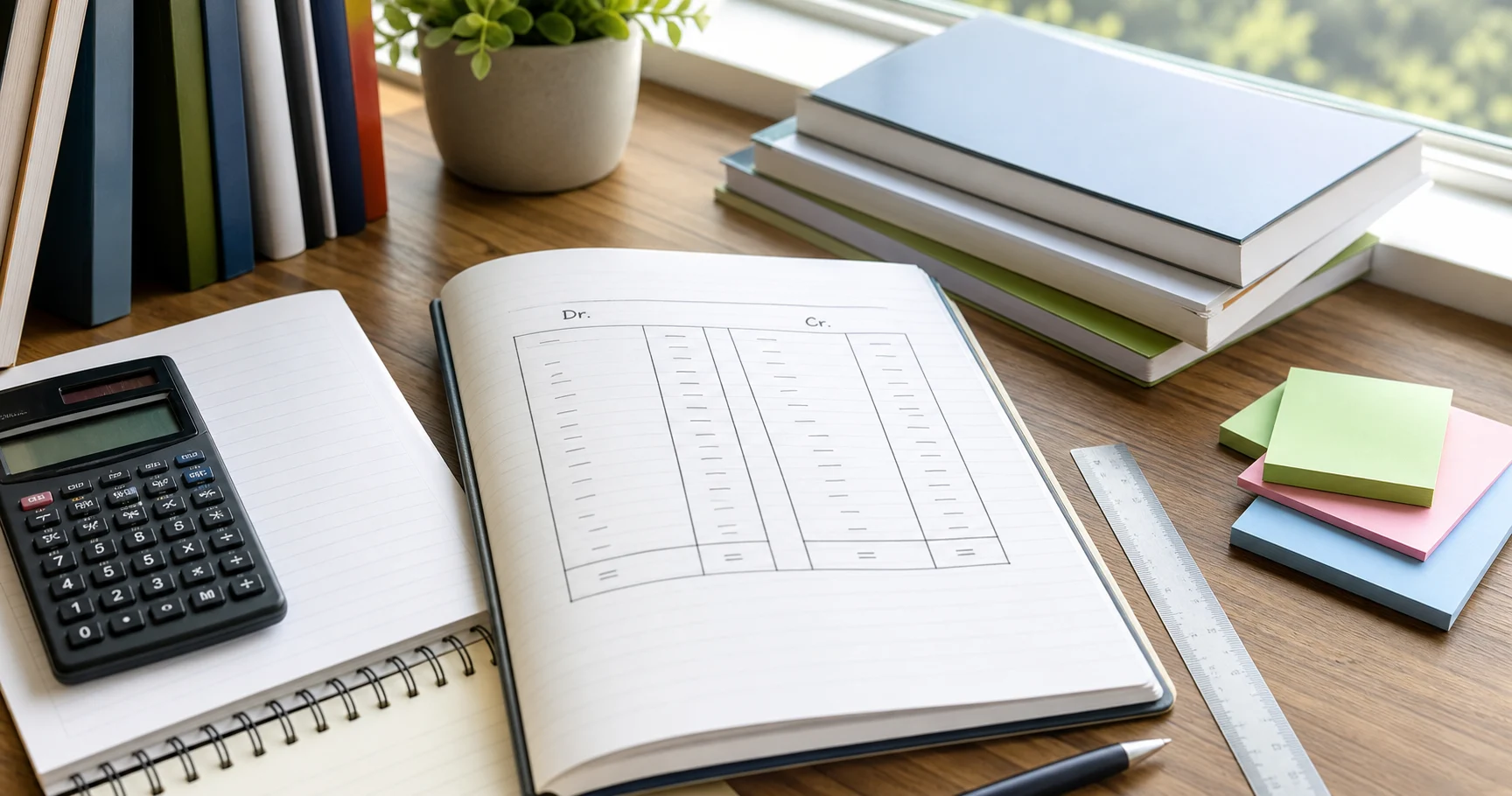
Trial Balance is one of the first places where Class 11 Accountancy starts feeling serious.
Till journal and ledger, students often feel they are learning steps one by one. A transaction is recorded in the journal. Then it is posted to the ledger. Then each ledger account is balanced. Trial Balance brings all those balances together in one place.
That is why it matters so much.
It is not just another format to memorise. It is a checkpoint. It tells you whether the debit and credit sides of the ledger have been brought forward properly and whether the basic double-entry system is still balanced.
But there is one thing every student should know early: a matching Trial Balance does not mean every entry is perfect, and a Trial Balance that does not match does not mean you are weak in Accountancy.
Once you understand this, the chapter becomes less stressful. You stop treating the Trial Balance total as a mystery and start treating it as useful feedback.
What Trial Balance Means in Simple Words
A Trial Balance is a statement that lists the balances of ledger accounts on a particular date.
Accounts with debit balances are written on the debit side. Accounts with credit balances are written on the credit side. After that, both sides are totalled.
If the total of the debit column equals the total of the credit column, the Trial Balance is said to agree.
The basic reason is simple: every transaction has two sides. If one account is debited, another account is credited. So, after all journal entries and ledger postings are complete, the total debit effect and total credit effect should be equal.
Think of it like this:
| Step | What happens |
|---|---|
| Journal | Transactions are first recorded |
| Ledger | Transactions are grouped account-wise |
| Trial Balance | Ledger balances are collected and checked |
Trial Balance does not create new accounting information. It organises the information already recorded in the ledger.
This is why you should not study Trial Balance as an isolated chapter. It depends on your journal entries, ledger posting, balancing, and basic debit-credit understanding.
Why Trial Balance Matters in Class 11
Trial Balance is important because it connects the early Accountancy chapters with final accounts.
If ledger balances are not collected properly, preparing Trading Account, Profit and Loss Account, and Balance Sheet becomes confusing later. Trial Balance acts like a bridge between ledger accounts and financial statements.
There are four main reasons students should take it seriously.
First, it checks whether debit and credit totals are equal. If they are not equal, there is likely some mistake in recording, posting, totalling, or balancing.
Second, it gives a summary of account balances. Instead of opening every ledger account again and again, you can see all balances in one statement.
Third, it prepares you for final accounts. Many items in the Trial Balance later go into Trading Account, Profit and Loss Account, or Balance Sheet.
Fourth, it builds disciplined thinking. You learn that Accountancy is not only about getting an answer. It is also about checking whether the answer fits the system.
This small habit helps you catch placement errors early.
What It Means When Trial Balance Matches
When the Trial Balance matches, it means the total of debit balances equals the total of credit balances.
This is a good sign. It usually means:
- Ledger balances have been brought to the correct side.
- Both sides of accounts were posted in equal amounts.
- Totalling and balancing may have been done correctly.
- The basic debit-credit equality has not been disturbed.
But do not misunderstand the meaning of matching.
A matched Trial Balance only proves arithmetical agreement. It does not prove that every transaction was recorded correctly.
For example, if rent paid is wrongly recorded as salary paid, the debit and credit totals may still match. The wrong expense account was used, but the debit-credit equality did not break.
This is why a student should feel happy when the Trial Balance agrees, but not careless.
What It Means When Trial Balance Does Not Match
When Trial Balance does not match, it means the debit total and credit total are different.
This difference is a signal that something has gone wrong somewhere. The mistake may be small or large. It may be a posting error, a totalling error, a balancing error, or an amount copied incorrectly.
The important thing is not to panic.
In Class 11, Trial Balance not matching is normal during practice. It teaches you how to check your own work. Many students actually improve their Accountancy skills because they learn how to trace mistakes patiently.
Common reasons include:
- Posting an amount only on one side of the ledger.
- Posting the correct amount to the wrong side.
- Writing a ledger balance on the wrong side of the Trial Balance.
- Copying an amount incorrectly from ledger to Trial Balance.
- Making a mistake while totalling a ledger account.
- Making a mistake while totalling the Trial Balance columns.
- Forgetting to include an account balance.
This is the mindset that makes the chapter easier.
Errors That Usually Make Trial Balance Disagree
Some mistakes disturb the equality of debit and credit totals. These are the errors that usually make the Trial Balance disagree.
One-Sided Posting Error
This happens when only one side of a transaction is posted to the ledger.
Suppose cash received from a debtor is posted to Cash Account, but the debtor’s account is not posted. One side has been recorded, but the other side is missing. This will disturb the Trial Balance.
Posting to the Wrong Side
Sometimes the amount is posted, but on the wrong side of the account.
For example, an amount that should be posted on the debit side of an account may be posted on the credit side. This does not simply create a small difference. It can create a difference equal to double the amount.
Wrong Totalling of an Account
If the debit or credit side of a ledger account is totalled incorrectly, the balance of that account will also be wrong.
That wrong balance then moves into the Trial Balance.
Wrong Balance Brought Down
A student may calculate the balance correctly but bring it down incorrectly.
For example, an account may have a debit balance of Rs. 12,500, but the student writes Rs. 15,200 in the Trial Balance. The Trial Balance will not agree because the copied amount is wrong.
Account Omitted From Trial Balance
If a ledger balance is completely left out, the Trial Balance may not match.
This often happens with smaller accounts such as discount, interest, commission, carriage, or drawings. Students focus on big accounts like cash, capital, purchases, and sales, then miss one small balance.
Errors That May Not Be Shown by Trial Balance
This is the part many students forget.
Trial Balance can agree even when some mistakes exist. These mistakes do not disturb the equality of debit and credit totals, so the Trial Balance may not reveal them.
Here are the common ones.
Error of Omission
If a transaction is completely omitted from the books, neither debit nor credit is recorded.
Because both sides are missing, the Trial Balance may still agree.
For example, goods purchased on credit from a supplier are not recorded at all. Purchases Account is not debited, and the supplier’s account is not credited. The accounting record is incomplete, but Trial Balance may still match.
Error of Commission
This happens when the correct class of account is used, but the wrong personal account is selected.
For example, cash received from Rohan is wrongly posted to Mohan’s account. The debit to Cash Account and credit to a personal account may still exist, so the Trial Balance can agree.
Error of Principle
This happens when an accounting rule is broken.
For example, the purchase of furniture is recorded as an expense instead of an asset. The debit and credit may still be equal, but the treatment is wrong.
Compensating Errors
Sometimes two or more errors cancel each other out.
One error may increase the debit side by Rs. 1,000, while another error may increase the credit side by Rs. 1,000. The Trial Balance may agree, but mistakes still exist.
Complete Reversal of Entry
If the correct accounts are used but the debit and credit are reversed, the Trial Balance may still agree.
For example, if Cash Account should be debited and Sales Account should be credited, but Sales Account is debited and Cash Account is credited, both sides still have equal amounts. The agreement remains, but the entry is wrong.
Understanding this difference helps you write better answers and also solve questions more carefully.
A Calm Method to Find the Difference
When your Trial Balance does not match, do not erase everything immediately.
Use a method.
Start with the difference between the debit and credit totals. Write it clearly at the side of your notebook.
Then check in this order:
- Re-total both Trial Balance columns.
- Check whether the difference equals any ledger balance.
- Check whether half the difference equals any amount posted on the wrong side.
- Tick each ledger balance against the Trial Balance.
- Check whether debit balances are placed on the debit side and credit balances on the credit side.
- Recheck the totals and balances of ledger accounts.
- Look for copied amounts, especially transposed numbers like 2,450 written as 2,540.
This order prevents random checking. Random checking wastes time because you keep looking at the same accounts without a system.
You may not find the error in the first minute. That is fine. Error location is a skill, and it improves with practice.
How to Avoid Trial Balance Mistakes While Practising
Most Trial Balance mistakes begin before the Trial Balance is prepared.
They begin in the journal or ledger.
So the best way to avoid Trial Balance stress is to work neatly from the beginning.
Use these habits:
- Keep account names consistent.
- Leave enough space while posting ledger accounts.
- Write debit and credit amounts in separate columns clearly.
- Balance ledger accounts slowly.
- Do not copy balances into Trial Balance until ledger balancing is complete.
- Tick each account after bringing it into the Trial Balance.
- Recheck small accounts, not only large accounts.
- Write totals carefully and avoid mental shortcuts.
Accountancy rewards neatness. A messy notebook does not only look untidy. It also hides mistakes.
Over time, you will see your pattern. Maybe you often forget drawings. Maybe you put discount received on the debit side. Maybe you copy ledger balances too fast. Once the pattern is visible, it becomes easier to fix.
Why Trial Balance Builds Confidence for Final Accounts
Trial Balance is not the end of the accounting process. It is a preparation point.
After Trial Balance, students usually move toward final accounts. That is where many ledger balances are used to prepare Trading Account, Profit and Loss Account, and Balance Sheet.
If Trial Balance is clear, final accounts become more manageable.
You already know which balances are related to expenses, incomes, assets, liabilities, capital, drawings, purchases, and sales. You become more comfortable deciding where each item belongs.
This is why Trial Balance should not be skipped or rushed. It trains you to see Accountancy as a connected system.
Journal entries are not separate from ledger. Ledger is not separate from Trial Balance. Trial Balance is not separate from final accounts. Each step depends on the step before it.
How Students Should Study This Chapter
Do not study Trial Balance only by reading the format.
Reading the format may help you recognise the columns, but it will not teach you how to prepare one.
Practise in layers:
| Practice layer | What to focus on |
|---|---|
| First round | Identify debit and credit balances |
| Second round | Transfer balances into Trial Balance |
| Third round | Find why totals do not match |
| Fourth round | Connect Trial Balance items with final accounts |
Start with small questions. Then move to longer ones. If a question does not match, do not immediately check the answer key. Spend a few minutes trying to locate the error yourself.
That effort is where learning happens.
Once that happens, the chapter becomes a strength instead of a source of fear.
Final Thought
Trial Balance is a simple idea with deep value.
It teaches Class 11 students that Accountancy is a system. Every debit has a credit. Every posting affects a balance. Every balance must be placed carefully. And every mismatch has a reason.
If your Trial Balance does not agree, stay calm. Check step by step. The difference is not there to scare you. It is there to guide you back to the mistake.
And if your Trial Balance agrees, be pleased, but still stay careful. Agreement is a good sign, not a guarantee that everything is perfect.
Learn Trial Balance properly now, and final accounts will feel much more logical later.
Frequently Asked Questions
What is Trial Balance in Class 11 Accountancy?
Trial Balance is a statement that lists all ledger account balances on a particular date. Debit balances are written on the debit side, and credit balances are written on the credit side. It helps check whether total debits and total credits are equal.
Why is Trial Balance prepared?
Trial Balance is prepared to check the arithmetical accuracy of ledger accounts and to collect balances in one place before preparing final accounts. It also helps students find posting, balancing, and totalling mistakes.
Does a matching Trial Balance mean there are no mistakes?
No. A matching Trial Balance means debit and credit totals are equal, but some mistakes can still exist. For example, a transaction may be completely omitted, or the wrong account may be used while keeping debit and credit totals equal.
Why does Trial Balance not match sometimes?
Trial Balance may not match because of one-sided posting, wrong-side posting, wrong totalling, wrong balancing, copying mistakes, or omission of a ledger balance from the Trial Balance.
What should I check first when Trial Balance does not agree?
First re-total both Trial Balance columns. Then check whether any ledger balance has been missed, whether any amount was copied wrongly, and whether any balance was placed on the wrong side.
Can Trial Balance show all types of accounting errors?
No. Trial Balance can reveal many arithmetical errors, but it cannot show every accounting error. Errors of omission, errors of principle, compensating errors, and complete reversal of entries may not be revealed by Trial Balance.
How can I become better at Trial Balance questions?
Practise ledger balancing, keep account names neat, tick every balance when copying it into Trial Balance, and maintain a small error log. The more you understand your repeated mistakes, the faster you improve.
Looking for commerce tuitions?
Prachi is a gold-medalist commerce teacher with experience at Deloitte and KPMG. She focuses on fundamentals to build a strong foundation.